If Your Startup Can't Run Without You, You Don't Have a Company Yet
Startups love the mythology of the heroic founder. Jeff Bezos, Sam Altman, Peter Theil…The charismatic visionary. The relentless operator. The genius product mind who bends reality through sheer will.
But here’s the uncomfortable truth most founders only learn after scaling:
If the company cannot function without you, you haven’t built a company.
You’ve built a dependency. And dependencies do not scale.
They collapse the moment the founder becomes the bottleneck. The real job of a founder is not to run the company forever.
It’s to design systems that survive them.

Founder Dependency Trap
Most startups begin as extensions of the founder. It the who founder sells. It the who founder hires. It the who founder closes investors. It the who founder resolves product debates. It the who founder holds the culture together.
This is normal in the early stage.
But many companies never graduate beyond this phase. They grow revenue, hire employees, raise capital…yet the operating system of the company is still one human brain.
This is where fragility begins…because founders eventually become the constraint.
Growth Exposes Structural Weakness
The moment a startup begins to scale, hidden structural problems emerge:
- Decisions slow down
- Teams escalate everything upward
- Strategy becomes reactive
- Execution depends on constant founder intervention. This isn’t a talent issue.
It’s an architecture problem. The company was built around the founder’s presence, not around durable systems. Think of it like building a skyscraper where the architect must personally hold up the beams.
At small scale, it works. At larger scale, it collapses.
Uber and the Founder Bottleneck - In the early days of Uber, the company moved with incredible speed under Travis Kalanick. Decisions were centralized. The culture was aggressive. The Growth was relentless.
But the same founder-driven intensity that accelerated expansion also created systemic fragility:
- cultural breakdowns
- governance conflicts
- operational chaos across global markets
Eventually the board had to intervene. Kalanick stepped down, and Uber had to rebuild governance, culture, and operational systems under Dara Khosrowshahi.
The lesson wasn’t that founders are the problem. The lesson was simpler: Uber grew faster than its internal systems matured. And the founder became the central load-bearing pillar.
The Alternative - Founder as System Designer
Great founders eventually evolve from operators into architects. Instead of solving every problem themselves, they design systems that solve problems repeatedly.
This shift happens across three layers.
Layer 1: Decision Architecture
If every important decision flows through the founder, the company cannot scale. Durable companies build decision frameworks:
- Clear ownership
- Defined escalation paths
- Data-driven evaluation systems
Look at Amazon…Jeff Bezos institutionalized decision frameworks like Type 1 vs Type 2 decisions, allowing teams to move fast without constant executive oversight.
The result?
Amazon scaled decision velocity across thousands of teams.
Layer 2: Cultural Operating System
Culture cannot depend on founder charisma. If it does, culture evaporates when the founder exits. Instead, durable companies encode culture into:
- hiring filters
- incentive systems
- performance reviews
- operating principles
Netflix famously built its culture around the Freedom & Responsibility framework under Reed Hastings. It became an internal operating manual for behavior not just a slogan.
Layer 3: Institutional Memory
Young companies rely on conversation. Mature companies rely on systems of record. This includes:
- documented processes
- shared knowledge systems
- transparent metrics dashboards
Without institutional memory, companies repeat mistakes every year. With it, organizations compound learning.
The Founder Evolution Curve
Most successful founders go through three distinct stages.
- Stage 1 — Builder: You create the product, close early customers, and prove demand. Speed matters more than structure.
- Stage 2 — Operator: You hire teams, manage complexity, and drive execution. Leadership replaces individual contribution.
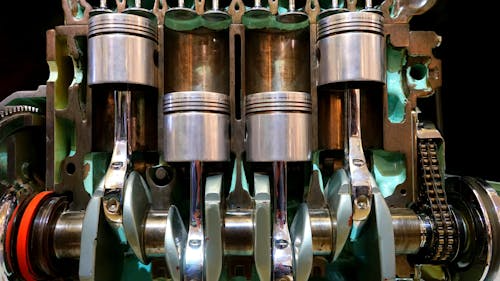
- Stage 3 — Architect Your primary job becomes designing systems…governance, incentives, communication structures & decision frameworks
At this stage, the founder is no longer the engine of the company. They are the designer of the engine.
The Companies That Truly Survive
The startups that endure for decades share one common trait: They no longer depend on the founder.
Consider companies like:
- Apple after Steve Jobs
- Microsoft after Bill Gates
These organizations outlived their founders ( in some cases, literally) because systems were eventually built that could operate independently. When companies fail after founders exit, it’s rarely because the founder left.
It’s because the systems were never designed to survive them.
The ultimate test of a founder is not:
- the valuation they reach
- the funding they raise
- or the growth they generate
It’s much simpler.
If you disappeared for six months, would the company continue to function?
If the answer is no, the work isn’t finished. Because building a startup is not about becoming indispensable. It’s about making yourself progressively unnecessary. That’s when a company stops being a startup.
And starts becoming an institution.